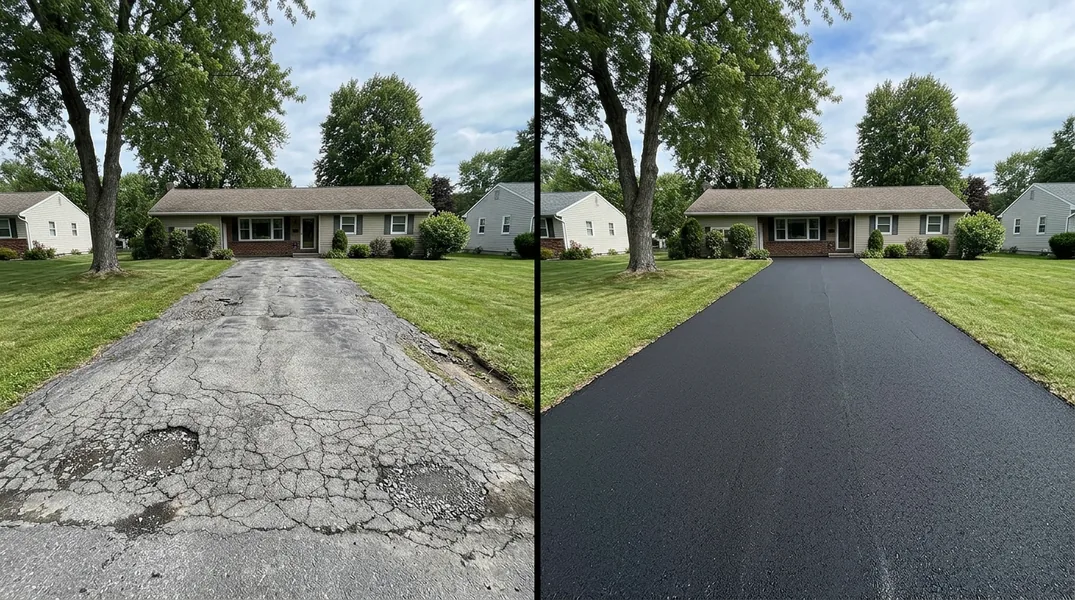
Understanding the Freeze-Thaw Cycle and Your Driveway
If you own a home in Albany, you're well aware of the harsh winters that come with living in upstate New York. What you might not realize is that the freeze-thaw cycle is one of the most destructive forces working against your asphalt driveway year after year. This natural process is relentless and affects nearly every driveway in the region, regardless of age or initial quality.
The freeze-thaw cycle works like this: water seeps into tiny cracks and pores in your asphalt. When temperatures drop below freezing, that water expands as it turns to ice, pushing outward with tremendous force. When the temperature rises above freezing, the ice melts and the water drains away, leaving behind small voids and gaps. Repeat this cycle dozens of times throughout an Albany winter, and you've got a recipe for serious pavement damage. Over months and years, these microscopic fractures grow into visible cracks, potholes, and surface deterioration that compromise both the appearance and structural integrity of your driveway.
The 42-Inch Frost Line: What It Means for Albany Homeowners
The frost line is the maximum depth to which the ground freezes during the winter season in a given geographic area. In Albany and the surrounding Capital Region, that depth is approximately 42 inches. This measurement is crucial for anyone involved in construction, driveway installation, or property maintenance because it directly impacts how the ground beneath your driveway behaves during winter.
When the ground freezes to this depth, the soil beneath your driveway expands in a process called frost heave. This upward pressure can cause your asphalt surface to shift, crack, and buckle. You might notice that your driveway develops an uneven, wavy appearance or that sections have risen slightly higher than others. These aren't cosmetic issues; they're structural problems that worsen over time. The deeper the frost line, the more severe the potential for heaving and damage. This is why proper Asphalt Driveway Paving & Installation in Albany requires careful attention to base preparation and drainage to minimize frost heave effects.
How Winter Weather Accelerates Driveway Deterioration
Beyond the freeze-thaw cycle itself, other winter conditions compound the damage to your asphalt. Salt and chemical de-icers, while necessary for safety, are highly corrosive to asphalt and the base materials underneath. These substances accelerate the breakdown of the binder that holds asphalt together, making your driveway more susceptible to cracking and crumbling. Additionally, the constant application of salt creates a cycle where water is drawn into the pavement more readily, intensifying the freeze-thaw damage.
Snow removal equipment also takes its toll. Plowing and shoveling can gouge the surface, especially if your driveway is already weakened by cracks or potholes. What starts as a small imperfection can quickly become a major repair issue after a season of heavy snow removal. This is why addressing damage early through Pothole Repair & Asphalt Patching is far more cost-effective than waiting until your entire driveway needs replacement. Many homeowners in Albany wait too long, only to face expensive repairs that could have been prevented with timely maintenance.
Signs Your Albany Driveway Needs Professional Attention
Recognizing the early warning signs of freeze-thaw damage can save you thousands of dollars in repairs. Look for small cracks that appear after winter or expand significantly from year to year. Alligator cracking, which looks like a web of interconnected fissures, is a clear indicator that your driveway's base is failing due to repeated freeze-thaw cycles. Potholes, uneven surfaces, and areas where the asphalt has become soft or sticky are also red flags that professional help is needed.
If you notice water pooling on your driveway or if you can see the base material (gravel or stone) showing through worn spots, these are signs that your driveway's protective layer has been compromised. Don't wait until spring to address these issues. Early intervention with Driveway Repair or Asphalt Resurfacing & Overlay can extend your driveway's life significantly. When you're ready to assess the condition of your driveway, contact Albany Asphalt Paving at (838) 217-7043 for a professional evaluation.
Choosing the Right Contractor: Questions to Ask About Freeze-Thaw Protection
When you're ready to invest in Asphalt Driveway Paving & Installation, how you choose a paving contractor matters tremendously. Not all contractors understand the specific challenges posed by Albany's climate and the 42-inch frost line. Ask potential contractors about their experience with freeze-thaw issues and what specific measures they take to mitigate this damage. Do they install proper drainage systems? What base preparation do they recommend? Will they use quality asphalt mix designed for cold climates?
Be wary of contractors offering suspiciously low bids or those pushing leftover asphalt scam deals. These are red flags for substandard work. A reputable contractor will explain their process, provide references from local customers, and offer transparent pricing based on your specific needs. Ask about warranties and what maintenance they recommend to protect your investment. Driveway paving scams often target homeowners who don't ask the right questions, so don't hesitate to request detailed information about materials, methods, and guarantees. A professional contractor like Albany Asphalt Paving will be happy to answer all your questions and provide a detailed free estimate so you know exactly what you're paying for.
Protecting Your Investment: Maintenance Tips for Albany Winters
Once you've invested in quality Asphalt Driveway Paving & Installation, protecting that investment through proper maintenance is essential. Seal coating your driveway every two to three years creates a protective barrier that slows water penetration and extends the life of your asphalt significantly. This simple step can reduce the severity of freeze-thaw damage by minimizing the amount of water that enters the pavement structure.
During winter, keep your driveway as clear of snow and ice as possible, but be gentle with your removal methods. Use plastic shovels rather than metal when you can, and avoid aggressive scraping that damages the surface. Minimize salt application where possible, or consider using less corrosive alternatives. Fill small cracks promptly before winter arrives to prevent water from entering and expanding during freeze-thaw cycles. By taking these preventive steps, you'll dramatically reduce the rate at which freeze-thaw damage accumulates. If you're unsure about the best maintenance approach for your specific driveway, Albany Asphalt Paving can provide expert guidance. Call us at (838) 217-7043 or request a free estimate to discuss a maintenance plan tailored to your needs.
Looking for a professional asphalt paving contractor in Albany? Albany Asphalt Paving responds fast for all your asphalt paving needs.
Get a Free Quote