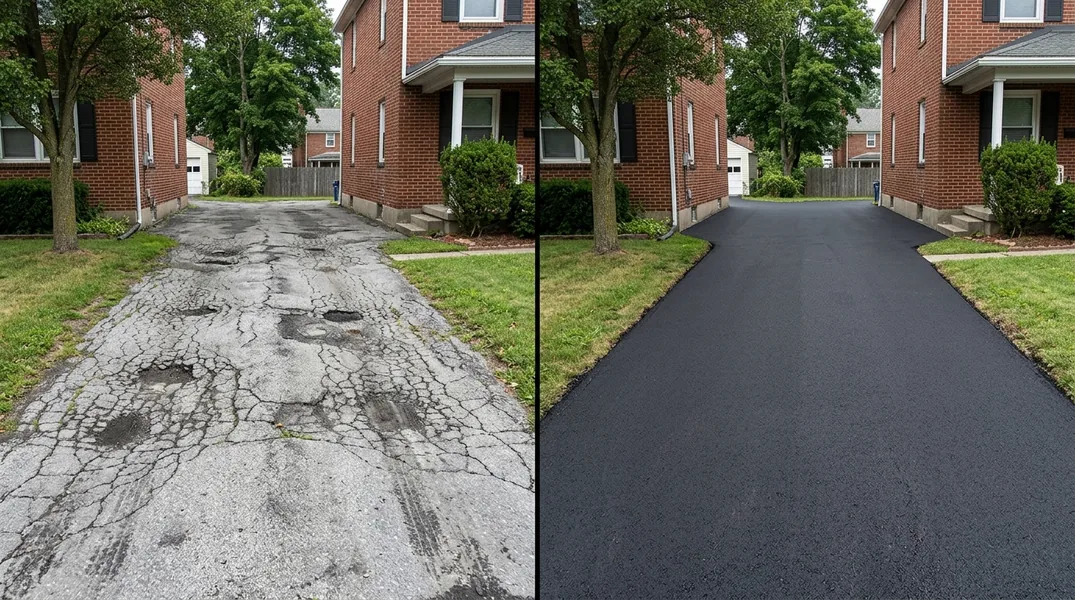
Understanding Your Driveway's Condition: The Three Main Options
Your driveway is one of the most visible and heavily used features of your home. Over time, Albany driveways face harsh winters, UV exposure, and constant vehicle traffic that can cause cracks, potholes, and surface deterioration. When damage appears, homeowners often face a critical decision: should you patch it, mill and overlay it, or replace it entirely? The answer depends on the extent of damage, your budget, and how long you plan to stay in your home.
Understanding the differences between these three approaches will help you make an informed decision that maximizes your investment. Each option has distinct advantages and limitations, and choosing the wrong one could leave you spending more money down the road or dealing with recurring problems.
When Patching Makes Sense: Quick Fixes for Minor Damage
Pothole Repair & Asphalt Patching is the most affordable and quickest solution for isolated damage. If your driveway has a few potholes, small cracks, or localized soft spots, patching can restore functionality without the cost or time commitment of a full replacement. A professional patch involves cleaning the damaged area, filling it with fresh asphalt, and compacting it to match the surrounding surface.
However, patching is best suited for driveways that are otherwise in good condition. If your driveway has widespread cracking, alligator patterns, or multiple problem areas spread across the surface, patching becomes a band-aid solution. You might find yourself patching the same area again within a year or two, especially in the freeze-thaw cycles common to Colonie and surrounding regions. Patching typically costs significantly less than other options, making it ideal for homeowners on tight budgets or those with temporary damage from potholes.
Milling and Overlay: The Middle Ground Solution
Asphalt Resurfacing & Overlay is a middle-ground option that removes the top layer of damaged asphalt and applies a fresh layer on top. This process, often called milling, grinds down the old surface and then lays new asphalt directly over the existing base. It's an excellent choice when the underlying foundation is still sound but the surface has deteriorated significantly.
Milling and overlay work well for driveways with widespread surface damage, oxidation, and multiple small cracks. The process takes longer than simple patching but costs considerably less than a complete replacement. One important consideration is that resurfacing raises the level of your driveway slightly, which could affect transitions to your garage, walkways, or street. Before committing to this approach, discuss these details with a professional contractor who can assess whether your driveway's base layer is suitable for overlay work.
Full Replacement: When Your Driveway Needs a Fresh Start
Asphalt Driveway Paving & Installation is the most comprehensive solution and the best long-term investment for severely damaged driveways. Full replacement involves removing the old asphalt entirely, repairing or rebuilding the base layer, and installing a completely new driveway from the ground up. This approach is necessary when the underlying foundation has shifted, when base layer damage is extensive, or when the driveway is nearing the end of its serviceable life.
While full replacement carries the highest upfront cost, it provides the longest-lasting results and allows you to address underlying issues that patching or overlay cannot fix. A new driveway typically lasts 15 to 20 years with proper maintenance, making it a worthwhile investment if you plan to remain in your home long-term. Full replacement also gives you the opportunity to improve drainage, adjust slope for water runoff, and ensure proper compaction of all layers for maximum durability.
How Long for Asphalt to Cure and When You Can Drive on New Asphalt
One of the most common questions homeowners ask is how long for asphalt to cure before they can use their new driveway. The answer depends on weather conditions, asphalt mix design, and traffic load. Generally, new asphalt reaches initial set within 24 to 48 hours, meaning you can walk on it and light vehicle traffic is possible. However, how long before you can drive on new asphalt with full confidence is typically 7 to 10 days for normal passenger vehicles.
During the curing period, the asphalt continues to harden and bond with the underlying layers. Heavy trucks, RVs, or repeated heavy traffic during the first week can create permanent depressions or soft spots. Temperature plays a crucial role in curing speed. Cooler weather slows the process, while warm, sunny conditions accelerate it. Your contractor will provide specific guidance based on the weather at the time of installation. Avoid parking in the same spot repeatedly during the first two weeks, and try not to make sharp turns or brake heavily on the new surface until it has fully cured.
New Asphalt Driveway Care: Protecting Your Investment
New asphalt driveway care begins immediately after installation and continues throughout the life of your driveway. The first step is to avoid heavy use during the curing period, as mentioned above. Once your driveway has fully cured, the next critical step is sealing. Many contractors recommend waiting 6 to 12 months before applying the first seal coat, allowing the asphalt to cure completely and any excess oils to evaporate. After that initial seal, you should reapply seal coating every 2 to 3 years to protect against UV damage, water penetration, and oxidation.
Beyond sealing, regular maintenance includes cleaning debris, addressing cracks promptly, and avoiding harsh chemicals or excessive heat. How often to seal driveway depends on climate, traffic volume, and sun exposure. In Latham and the surrounding area, where winters are severe and UV exposure is significant, sealing every 2 to 3 years is typically recommended. Proper maintenance can extend your driveway's lifespan by several years and prevent small issues from becoming expensive repairs. Neglecting seal coating can lead to rapid deterioration, especially in regions with freeze-thaw cycles.
Getting Expert Guidance for Your Albany Driveway
Deciding between patching, milling, and replacement isn't always straightforward, and the right choice depends on your specific situation. A professional assessment from an experienced contractor is invaluable. Albany Asphalt Paving serves Troy, Latham, Colonie, and surrounding communities with expert Driveway Repair and installation services. Our team can evaluate your driveway's condition, explain your options, and recommend the most cost-effective solution for your needs.
Whether you need a quick patch to address a pothole or you're ready to invest in a completely new driveway, we're here to help. Contact Albany Asphalt Paving today at (838) 217-7043 or request a free estimate to discuss your driveway project. Our professionals will walk you through the process, answer your questions about curing times and maintenance, and ensure you understand exactly what to expect. Don't let driveway damage compromise your home's curb appeal or safety. Reach out today and let us help you make the right decision for your property.
Looking for a professional asphalt paving contractor in Albany? Albany Asphalt Paving responds fast for all your asphalt paving needs.
Get a Free Quote